I am a Writer

The other day I was scrolling through pinterest, when a pin with a writing quote came up. It said something like, “A real writer doesn’t write because they want to, but because they can’t stop.”

And you know what, it made me feel gross, worried, and finally angry.

I have struggled with wondering if I’m a “real writer” ever since I began writing almost four years ago. I would hear stories and quotes from people talking about how they’d been writing since they were children. How they always knew they wanted to write. This was their dream.

Well, guess what? It wasn’t mine. In fact, I have witnesses who can attest to the fact that five years ago I said, “Oh, I could never write a book. I’m way too succinct for that.”

Yes, you may laugh now.

But that history of mine, that lack of lifelong desire, it made me worry for a long time, that maybe I’m not really cut out for this writing gig. Maybe I’m not a “real” writer.

There are other comments and stereotypes out there that are unhelpful.

Real writers get an MFA.

Real writers have a dying need to write.

Real writers love every minute of writing.

Real writers make their living writing.

Real writers are published.

Hmmmm, yeah. None of these are helping me fight off that imposter syndrome. Most of the writers I know don’t have an MFA. I definitely don’t.

I enjoy writing, I really do. But I could live without it if I had to. Oh, I’d miss it. But it’s not a need. Not by any stretch.

I don’t know a single person who enjoys every minute of writing, either. I have to force myself into that chair every night. Take a deep breath before opening that document, and force myself to get into that groove. And sometimes when I’m drafting, I never hit that groove and the entire thing feels like an exercise in pain.

In the last four years of writing I’ve made less than $300.

And even though I have publishing credits to my name, they never made me feel anymore legit like I was hoping. The truth is, even after getting an agent, I still feel the same.

Because I am.

No publishing milestone, no amount of money, is going to change what I already am today.

A writer.

Not because it comes easy to me, or because I have to do it every day to maintain my sanity, or because I just can’t stop.

But because I do it. I make the time and I write.

And whether I write two pages a day, or go on 8 hour streaks every Saturday, or block out my afternoons for it, doesn’t matter.

I write. I write. I write.

That’s what makes me a writer. Not my history, or my talents, or my needs or desires. But that one, single action, done consistently.

Nobody can take that title away from me.

I am a writer.

When Someone You Love Gets an Agent

Congratulations! You’ve braved the highs and lows of your friend writing a book. You’ve watched them bounce from the despair of rejection to the excitement of a full request while querying, and now all of that encouraging, cheerleading, and patience has paid off!

giphy (6)

Your friend just came to you and said they have an offer! Let’s talk about what that means.

An offer is when an agent reads a writer’s book, falls in love, and says, “I have to represent this.” They then offer the author representation, (i.e. They take the book to all the big publishing houses in hopes that it will sell and they’ll get a 15% cut.)

There’s a bit of a process after this.

First, your friend will wonder if they’re dreaming.

Second, they’ll run around the house screaming and happy dancing.

giphy (7)

Third, they have to send an email off to all the other agents reading their book to let them know about the offer and give them 1-2 weeks to read and decide if they would also like to offer.

Fourth, wait. Many of the agents will “step aside” meaning, they’ll decide not to offer rep. But some may decide they also love the book, and offer rep.

It’s kind of counterintuitive, but there are plenty of writers who will admit that this 1-2 weeks between receiving an offer from an agent and then accepting an offer are actually pretty difficult. For starters, you get a huge slew of rejections in a short amount of time, some with feedback about why the agent said no, and all these responses can make the author doubt themselves and wonder if their work really is good enough. Then of course, if they do get multiple offers, they can only choose one agent. Writers have been receiving rejections for years. They know how it feels, and they hate having to hand it out. It can be an agonizing decision. So don’t be surprised if there area few tears during this time along with all the celebrating.

giphy (8)

Yeah, yeah, first world problems. They know.

So, some Do’s and Don’ts.

DO celebrate. This is a huge, huge step in your friends career. They didn’t go out and hire someone. This is some serious validation that your friend is good at what they do.

DO remind them, when they’re feeling down about those step asides, THAT THEY HAVE AN AGENT! WOOHOO!

DON’T confuse getting an agent with getting their book published. Plenty of people have agents but no book deal (yet). The agent will hopefully get your friend a book deal. But agent doesn’t equal book deal.

DON’T in any way, suggest that your friend is being silly when they get emotional during that 1-2 week waiting period. It really is hard. For everyone.

Okay, so what happens now?

There’s going to be a period of time between when your friend gets an agent and when they get a book deal. Here’s what your friend wants you to know about that.

  1. Your friend has to revise their book (again!) but this time with their agent’s notes. Sometimes these are really massive revisions and can take months.

2. The agent then takes the book to publishers. This is referred to as “Going on Sub” or “Going on Submission.” And it’s a lot like querying, in that the material is sent to the editors at the publishing houses, and then everybody hurries up and waits to hear if any of them want to publish it.

3. The publishing world moves very, very slowly. It can take months to hear back from an editor. Most of them will say no. Possibly all of them.

giphy (9)

4. If nobody buys the book or your friend and their agent decide that all their good options have been exhausted, they’ll have to make the hard choice called “shelving the manuscript.” And that stinks. It kind of feels like getting all your hopes up for nothing and your friend is going to be back in that pit of wondering if it is ever actually going to happen for them. They’ve put a lot of blood, sweat, and tears into that manuscript. Giving up on it is rough.

giphy (10)

5.Your friend is still writing books. So if they shelve a manuscript, they’ll shine up another one and try to send that one out on sub and go through the same process all over again.

6. Your friend is a lot closer to their goals now. But for some reason, that closeness makes the sting of rejection hurt even worse. There’s a good chance they’ll be an even bigger basket case when they’re on sub than they were while querying. Chocolate helps. Reminding them that 12 publishers turned down JK Rowling doesn’t.

7. And then there are some people who almost none of this applies to. There are some lucky dogs out there who sell their first book with their agent in a week or two. If your friend is one of these people, just realize this is not the norm and everyone is very envious. 😉

8. Even though your friend has been working and focusing on this huge step of getting an agent, in the scheme of their publishing career, it is really only the first step. It’s sort of like someone deciding they are going to open a restaurant and going out and buying the building. There is still so much work, and worrying, and a lot of luck, that goes into seeing that book on the shelf.

giphy (11)

Like all my other posts, the best thing you can do for your friend at this point is just listen without judgment, refrain from offering unwanted advice or invalidating their feelings, and just keep trying to be supportive.

When Someone You Love is Querying

So someone you care about has been writing, probably for quite a while now. You’ve seen them go through the highs and lows of drafting and revising. The roller coaster of excitement and self doubt. And now, at the end of all of that, they have a book. And it’s the best book they feel like they can write at this point. So they begin the dreaded process that is querying.

Querying?

Yeah, if you’re not a writer, you probably have no idea what that is. So I’ll explain it first.

If your friend is querying, it means they are pursuing traditional publication, i.e. publication through a company/publishing house. They are hoping to one day see their book on a shelf at the bookstore. But most of these publishing houses don’t let just anyone send them a book. They’re closed to unsolicited submissions. That means, if I send a manuscript to the folks at Random House, they won’t read it, they’ll throw it in the recycling.

giphy (1)

What your friend needs is an agent. An agent takes manuscripts to editors at these publishing houses and tries to sell your book. They have a foot in the door. When a reputable agent sends an editor a book, they read it, rather than throwing it away.

Why?

Because agents basically act like quality control in the publishing world. Most of them are open to unsolicited submissions. Agents read through hundreds of book submissions every month to find the ones that are the best. Not just the best, the ones the agent falls in love with and knows they absolutely have to take on and try to sell to publishers. Because agents have already done the filtering/quality control part of this process, most editors only accept submissions from them.

The process of finding an agent that will fall in love with your manuscript and agree to represent your work and take it to publishers is called querying. What your loved one is doing when they are querying is typing up a short cover letter, called a query, and sending it to agents they think would be interested in their sort of book. The agents then read the query and possible sample pages, and if they’re intrigued, they’ll request more. Here’s were we get into some outcomes and terms you should know because they’ll be happening to your friend on a regular basis.

Rejection = The agent said they weren’t interested.

Partial Request = An agent asked to see a small portion of the manuscript.

Full Request = An agent asked to read the whole manuscript.

So here is what your writer friend wants you to know about the querying process.

  1. It isn’t about selling a book. Not yet. There are no book deals being brokered at this point. So don’t ask about that. They’re trying to get a literary agent.
  2. It is a looooonnnnggg process. Lots of waiting. Often, a writer will send a query and have to wait several weeks to hear back from an agent. If that agent asks to read more of the manuscript they will probably wait months to hear back if it’s a yes or a no. There are people who have queried a book for a year or two before getting an agent for it. So don’t expect this process to be fast.

giphy (5)

3.Your friend is getting a lot of rejections. A LOT. This is just part of being a writer. every writer gets rejected at some point. Every. Single. One. Multiple times. Your friend will probably be a little bummed about a rejection, but they knew what they signed up for. Don’t act like each rejection is a big deal, or a sign that this book isn’t very good, or that agents don’t know what they’re doing. None of those things help your friend. The best thing you can do is say, “I’m sorry. That stinks.” And throwing in some chocolate never hurts either.

giphy They feel a lot like poor Tom Brady here.
4. A partial or full request is exciting, but ultimately not that huge of a deal. If your friend gets a request from an agent, it’s a good day. It means this manuscript is in roughly the top 10% of what comes into the agent’s inbox. That’s great news! But agents still end up rejecting the vast majority of manuscripts they request to read. Most usually only take on a few new clients a year. So don’t start talking like this is a sure thing or start telling all your family that an agent is reading her book and what not. Keep it between you and your friend.

5. Querying means that your friend has moved their writing beyond just a hobby. It means they are trying to pursue a career. Treat it like the endeavor it is. It’s important to them. Respect that.

giphy (4)

6. I’m just going to say this again. Your friend is getting rejected on at least a weekly basis, if not a daily basis sometimes. They probably have way more rejections than you know. So, while your heart is in the right place, don’t try to remind them about some big author who got rejected 12 times, or 62 times, or whatever. Your friends numbers might be way past this and being reminded of that just stinks. Honestly, the only one of these stories that has ever given me hope was reading how many times Kate Dicamillo’s BECAUSE OF WINN DIXIE was rejected, and that’s because it was over 200 times.

So, now that you really understand what is going on, let’s talk do’s and don’ts.

DON’T tell your friend they should just self-publish.

DON’T try to give them advice about writing different kinds of books.

DON’T comment on how often they are checking their email. They know they’re obsessing. Trust me.

DO try to distract them. Go out and have fun. Remind them there is life beyond their inbox.

giphy (2)

DO ask them what the next book they are working on is. This is the best way to not let querying beat you down.

DO celebrate and commiserate with them. Never invalidate their feelings.

DO try to talk them out of giving up. There will be days they want to. Give them your best “Let’s get ’em” speech.

giphy (3)

DO let them know you admire what they’re doing, no matter the outcome.

DO listen and try to be in tune with how much your friend wants to communicate about querying. Some won’t want to talk about it much. Others will want to tell you about each request. Try to follow their lead. It’s okay to ask about it, but with how slow publishing moves, I wouldn’t ask any more than once a week. Two times a month is probably plenty.

DON’T assume that if they can’t get an agent for this book, that it isn’t any good. That couldn’t be further from the truth. Getting an agent to fall in love with your book has a lot to do with skill, yes, but there is also an element of luck and timing to it. Did you see THE MARTIAN? That book was self-published after not getting picked up by agents.

And if your friend keeps working and writing and querying, hopefully they’ll come to you one day with the words, “I have an offer.” I’ll talk to you about that next week.

Cover Reveal for MACHINATIONS by Hayley Stone

Growing up, I lived on a steady diet of fantasy and science fiction. And so teenage me would be pretty envious of what I get to do today.


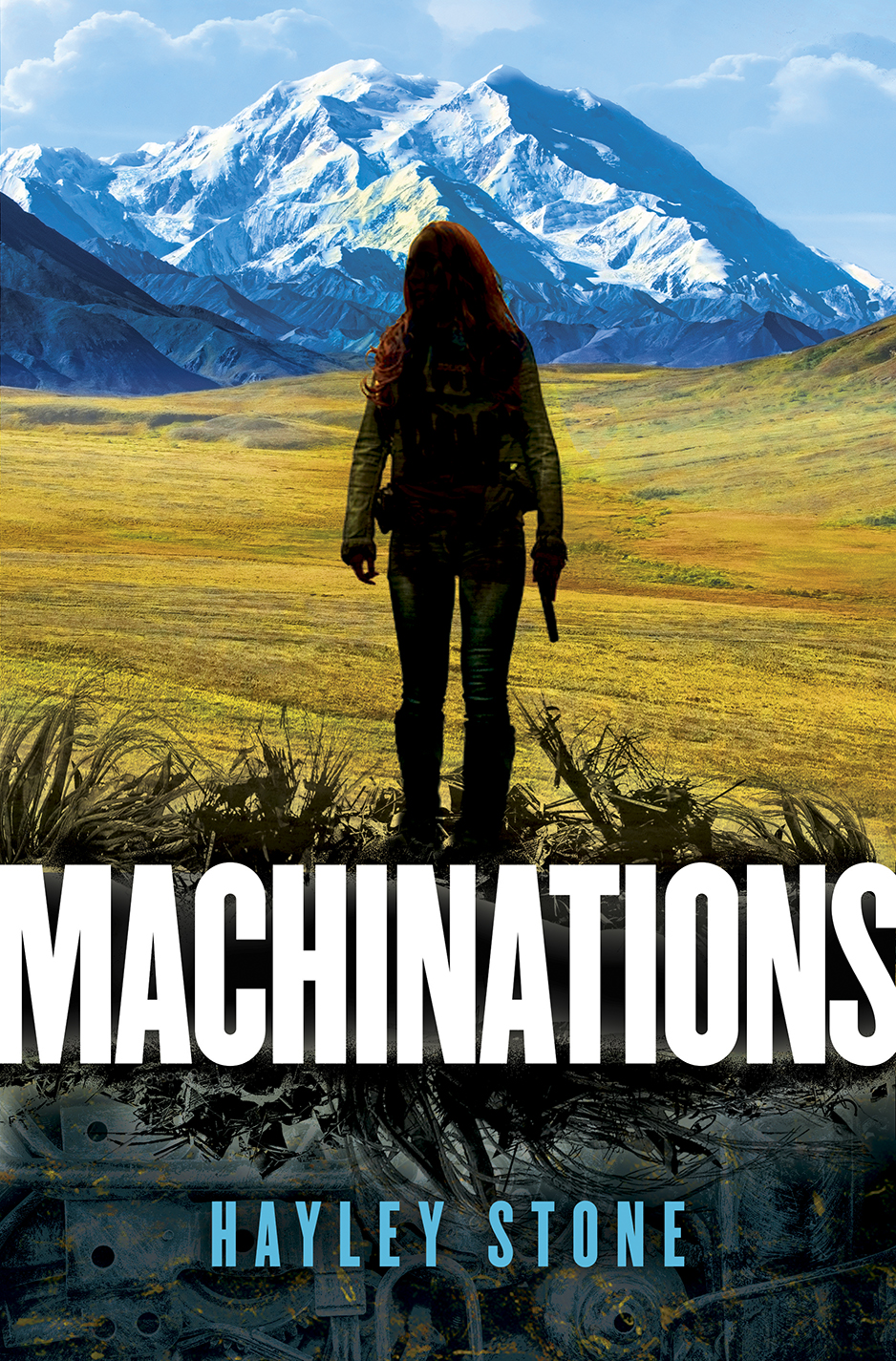
I get to reveal the brand new cover for Hayley Stone’s debut science fiction novel, MACHINATIONS! It releases June 14, 2016 from Hydra/Random House and sounds amazing!

But first, let’s see the cover.


It’s beautiful!


It’s awesome!


Yes, I’m totally stalling so that you have to keep scrolling.


Okay, okay. I’m done now!


Here it is!

Machinations Final Cover

Isn’t that totally intriguing? I love the juxtaposition of the two different worlds above and below the title. And if the cover isn’t exciting enough. Check out the blurb below and then go pre-order the book!


Perfect for fans of Robopocalypse, this action-packed science-fiction debut introduces a chilling future and an unforgettable heroine with a powerful role to play in the battle for humanity’s survival.

The machines have risen, but not out of malice. They were simply following a command: to stop the endless wars that have plagued the world throughout history. Their solution was perfectly logical. To end the fighting, they decided to end the human race.

A potent symbol of the resistance, Rhona Long has served on the front lines of the conflict since the first Machinations began—until she is killed during a rescue mission gone wrong. Now Rhona awakens to find herself transported to a new body, complete with her DNA, her personality, even her memories. She is a clone . . . of herself.

Trapped in the shadow of the life she once knew, the reincarnated Rhona must find her place among old friends and newfound enemies—and quickly. For the machines are inching closer to exterminating humans for good. And only Rhona, whoever she is now, can save them.

Pre-order Machinations today!

Amazon | Barnes & Noble | Kobo

And don’t forget to add it to your list on Goodreads!


ABOUT THE AUTHOR

hayley stone author photo

Website | Twitter | Facebook | Tumblr | Pinterest

Hayley Stone has lived her entire life in sunny California, where the weather is usually perfect and nothing as exciting as a robot apocalypse ever happens. When not reading or writing, she freelances as a graphic designer, falls in love with videogame characters, and analyzes buildings for velociraptor entry points. She holds a bachelor’s degree in history and a minor in German from California State University, Sacramento.

Machinations is her debut novel, releasing June 14th, 2016 from Hydra/Random House.

When Someone You Love is a Writer

Go to any sort of online writers forum and you are sure to find at least one reference to how the people in a writers life don’t really understand what they’re going through. This isn’t because their friends and loved ones don’t care, but the world of writing and publishing has it’s own set of vocabulary, rules, and patterns that you just don’t know about if you aren’t a writer yourself. It is with this idea in mind that I’ll be writing this series of blog posts to, hopefully, be used as a reference point for non-writers to understand what their writing loved ones are going through and how they can best support them.

The first post in this series: When Someone You Love Is a Writer

Someone you care about has just informed you that they are writing a book.  First off, congratulations. For many writers, admitting to anyone that they are pursuing anything as ambitious as writing and publishing a book takes a lot of courage and they obviously feel safe divulging this dream to you. You must be a pretty awesome person.

So what are they doing?

This is probably the easiest part of writing to understand.

Your friend is writing. Duh! But it probably doesn’t always look like you imagine. They are carving out any spare time that they can just to get in a few words. Or maybe they spend all day Saturday camped in front of their computer. But even when they’re not writing, they’re still writing.

If you catch your loved one with a silly grin on their face? Chances are one of the characters in their head just said something funny. If your friend scrambles for a piece of paper, they just had major inspiration about a plot problem that’s been plaguing them.

Your writing friend will be more “in the moment’ because every moment is full of possibilities and real life material always makes writing more authentic. Being a writer makes a person more interested in the stories around them. But they might also always be a little removed. Especially when they are working on a story, a writers brain is always using a little bit of brain power to work out plot problems, listen to characters, and daydream about future Newbery’s. 😉

They will probably be on a roller coaster of self doubt and excitement. One moment their book feels like the best story ever! The next, they’ll be convinced it’s a pile of poo. They might hit a road block and get cranky. Then they’ll figure it out and everything is good again.

So How Can I Best Support the Writer in my Life Right Now?

At this point in a writers journey, before they’ve started querying, get an agent, etc (and we’ll go through all of those in later posts) the best thing you can do is ask questions. Your friend is still figuring things out, experimenting, and learning, but chances are good, if you aren’t a writer, they know a whole lot more about the process and what they want out of it than you. The last thing they want is you telling them that they should self publish when they are pursuing traditional publishing.Or that they should focus on trilogies because those make all the money, when they write contemporary women’s fiction.

However, they’d probably love to tell you about what they’re working on, why writing makes them excited, and what they hope to do with their writing.

Encouragement is also always welcome. I can’t begin to tell you the number of time your friend will wonder if what they are doing is stupid or crazy. To hear from someone they love and trust that you think what they are doing is really neat, would mean a lot to them. If you haven’t read their work, don’t tell them they’re a great writer. It’s an empty compliment and doesn’t mean anything. But be genuine. Tell them you admire them for having and pursuing big dreams.

Things NOT to Say

I wish I had the luxury to write every day. (This makes it sound like your friend has nothing else to do with their time. This isn’t true. They’ve simply prioritized their life because writing is important to them. Chances are they’ve sacrificed something for that “luxurious” writing time.)

I have this great idea for a book. Will you write it? (Seriously, where’s the fun in that for the writer? It’s YOUR story. You write it.)

Is that realistic? (No, it’s not. It’s a big, crazy dream and everyone should be allowed to have one.)

Is that the best use of your time? (Translation: I don’t value creativity or art unless large sums of money are involved.)

You should write a children’s book. Those are easy.  (No. No, they’re not.)

Can I Read What They Write?

The answer to this question will vary with every writer. Some are okay sharing with their family and friends. Others want to keep everything under wraps. Whatever their attitude, don’t be offended. Your friend feels very vulnerable. It’s not that they don’t trust you, they are just trying to protect this new, little baby book and their own fragile hearts.

If your friend does let you read what they’ve written, get clear guidelines on what they want out of you reading it. If they just want to share something they are proud of with you. If they’ve polished and revised and feel like they have a finished product, don’t read with the idea of giving critique. Don’t try to give advice on how to make it better. Your friend is probably working with critique partners who give them hard feedback all the time, but hearing it from you is especially painful for some reason. Your best bet is a sincere compliment. Try to be specific, “I loved this character.” Or, “It was such an interesting setting.”

Other Ways to Support the Writer in Your Life

Talk about great books you’ve both read and get their opinion on them.

Again, ask about their writing and how it’s going.

Ask for book recommendations!

Bring snacks! Writers need fuel too.

Understand when they say they can’t hang out tonight because they are writing. This is important to them.

If you’re looking for a gift, all of these are well-loved books in the writing community and a great way to say, “I think you are awesome. Keep going.”

BIRD BY BIRD by Anne Lamott

BIG MAGIC by Elizabeth Gilbert

ON WRITING by Stephen King


Stay tuned for the next post in this series. “When Someone You Love is Querying.”

I’d love to hear your thoughts. What else would you want the non-writers in your life to know about the writing process?

The Query That Snagged My Agent

Okay, so queries don’t snag agents. Books do. But a well-written query and first pages are huge parts of that process. So without further ado, the query that resulted in the request, that led to the offer, that ended up with me getting an agent. 😉


Kate’s grandma says there are three rules for Everyday Magic. Believe, give, trust.

11-year-old Kate doesn’t believe in magic, though. After all, she believed her dad when he promised to stay with Mom through happiness and sorrow. But when sorrow poured into his heart like a mudslide, he left without saying goodbye. Kate’s not going to fall for her grandma’s silly idea that magic can bind families and heal hearts.

But when Kate’s mom gives her the opportunity to invite anyone she wants to her birthday party in Yosemite, Kate decides to try believing in magic and giving it away. Because, if Kate can ride the Mist Trail with anyone at all, she’ll pick her dad. And if magic is real, maybe it will cure his depression and bring him home. So Kate concocts a plan to make and give her father all the magical things she can think of. His favorite peanut butter cookies, the knitted hats from his childhood, and the letters she’s been writing to him and storing in a shoebox.

But if Kate’s plan fails, it will prove Everyday Magic is just another broken promise and Kate will lose more than a hike up the Mist Trail with her dad. She’ll lose faith in things like friends, forgiveness, and most of all, family.

Written in a mixture of letters and prose, THE THREE RULES OF EVERYDAY MAGIC is a heartfelt middle grade contemporary in the vein of THE BRILLIANT FALL OF GIANNA Z. meets LOVE, AUBREY. It is complete at 35,000 words.


How I Got My Agent!

I am so excited to announce that I have a literary agent and I am now represented by Elizabeth Harding at Curtis Brown. I just want to gush and gush about how awesome she is. She reps some amazing authors and award winning books (Karen Cushman, Gennifer Choldenko, Suzanne LaFleur) and I am honored and humbled to join her team.

My agent story is a bit twisty, most of you know the beginning part of it. How my story started off about guardian angel grandmothers, and then the amazing Brenda Drake let me have a Pitch Wars redo where I had the opportunity to learn from three amazing mentors. Joy McCullough-Carranza, Jessica Vitalis, and Rebecca Wells. With their spot on critiques, guidance, and line edits, I was able to produce a book that I am exceptionally proud of.

But then I had to query it. And querying stinks. Sending your work out to agents and hearing over and over again, “No thank you” or worse, nothing at all. It’s like having your dream stomped on over and over again. But inbetween all of that, there are the highs. When an agent wants to see the rest of the book! Yay!

That happened to me the day after I sent out my first round of queries. Elizabeth was actually my very first query request! I was floored. I’d emailed her because she was a dream agent, I didn’t really think I stood a chance with her. Even as I sent off the manuscript, I wouldn’t let myself hope. About six weeks passed, and I got more requests, and a slew of rejections to go along with them. I was beginning to feel like it just wasn’t going to happen for me. Then I got an email from an agent asking for a phone call. It felt like a miracle. She offered and I was thrilled. Thus began the longest two weeks ever!!!

Because it was all over Christmas break, I didn’t hear much from any of the other agents I notified of my impending offer until close to the end of the two weeks. And with only one day left before I had to make a decision, I’d only had a few step asides. Then I got two emails within ten minutes of each other. Both saying they loved the book and wanted a phone call. It was a busy day with emails flying and nerves going crazy, and two phone calls!

Every agent I spoke with was amazing, and I think I would have been happy with any of them. But in the end, I felt the most confident in Elizabeth’s experienced hands and I was really impressed with the way she spoke about my long-term career.

And so that’s the cliff notes version. The unedited version has a lot more screaming and exclamation points.

So for those who are interested (I know I always was) here are my stats.

Queries sent – 35

Requests from Pitch Wars – 12

Requests from querying – 10

Query request rate – 28.5%

Upgrade rate before offer – 50%

Total Offers – 3

Fear and Celebration

I began writing about 3.5 years ago. From the moment I began, there was fear.

The initial fears were along the lines of What will everyone think? Am I crazy? I’m not a real writer. I’m making myself look stupid.

Then I hit a milestone. I got published. By a very, very small online story database. But hey! Then I got a poem in a religious magazine. A revision request from Highlight’s!

And I celebrated!

For about five seconds, before tossing all of that behind me and setting my sights on a new goal. A bigger Yes! A better publishing gig.

And I hit other milestones.

I finished the first draft of my first novel. I wrote a picture book that wasn’t completely awful. I wrote my first short story and it was actually good and it was published in an anthology!

Then came the fear. Nobody will like the short story. It will make people mad. I’ll never be good enough to revise this novel. It will never live up to my vision. I’m not good enough to write a novel. I’m not a real writer.

But I kept writing, even as the fear and the voices telling me I wasn’t good enough and I never would be kept whispering. Even as I thought maybe I was a little bit crazy. Even as I worried I was wasting my time and there were more productive things I could be doing.

I hit other milestones. An article accepted by Highlight’s. My picture book published by an e-library app. Getting my first novel accepted into Pitch Wars. But the thrill faded into even more fears.

Your mentor hates you. You’ll never be able to fix this. Nobody will buy that. All the agents in the agent round will wonder how you got in. You don’t belong here.

But in the end, Pitch Wars changed everything. Not because of the competition itself, but because I got to join a large group of other writers and watch their journeys up close and personal. And I saw that cycle of fear and milestones continue to repeat over and over again no matter where they were. Whether they were querying, landing an agent, going out on sub, getting a book deal!

This year, some of them will see their first books published. These are huge milestones. But I also get to hear their fears. Their worries. I get to see that reaching that next milestone I’ve been longing for is not some magical happily ever after. It’s just another milestone that comes with new anxieties.

But this year, as I achieve a milestone I’ve been pursuing for the last three years, I’m not going to let fear get back in my head so soon. I’m going to take the time to revel in the beauty of the big moments. To look back on my journey and see how far I’ve come. I’m going to push aside those whispers that I’m not a real writer. That I’ll never find success. That all of it will come to nothing. And I’m going to celebrate.

But beyond celebrating, I’m going to finally believe. Believe in myself. Believe in my work. Believe that success is a possibility for me. That it’s within my grasp. Believe that I am a writer. Believe that my words are important.

The fear will never go away. But I’m going to try not to let it sit shotgun anymore.

Start Writing in 2016

I recently had a conversation with my sister about how to get started writing. And, of course, I found myself with lots of advice. That calls for a blog post, right? So here goes.

10 Ways to Start Writing in 2016

  1. Sit down every day and WRITE SOMETHING. Write anything. Maybe it’s just a bad poem. Maybe it’s a character sketch. A short story. A non-fiction piece. A couple pages of that novel. It doesn’t matter. Just write. Writing, like everything else, takes practice. You only get better at it, when you consistently pursue it. Find a regular time, put your butt in the chair, and write.

Start writing no matter what. The water does not flow until the faucet is turned on. -Louis L’Amour

2. Pants it. Talking to non-writers, I’ve realized there’s this idea that authors know exactly what will happen in their story before they sit down and write it. And therefore, if you don’t have everything nailed down, you can’t begin writing that novel. But nothing could be further from the truth. Writing is often an act of discovery. Many authors sit down with a basic idea of their book. But often, it’s not all spelled out. Sometimes authors just have a distinct character and voice when they begin writing. Maybe they just have an awesome premise and begin writing. Some have a detailed outline, but even then new things come out of the writing. I usually have a few scenes in my head. I know where the story ends, and I always know the climax, but everything between those two points is discovered in the process.

Creativity is a continual surprise.  -Ray Bradbury

3. Let go of perfectionism. Your first draft will be far from perfect. In fact it won’t even be close. Don’t stop because you aren’t living up to your expectations. I keep these quotes in mind when drafting.

Bad writing precedes good writing. This is an infallible rule, so don’t waste time trying to avoid bad writing. (That just slows down the process.) Anything committed to paper can be changed. The idea is to start and then go from there. -Janet Hulstrand

“I’m writing a first draft and reminding myself that I’m simply shoveling sand into a box so that later I can build castles.” -Shannon Hale

4. Commit to rewriting or revising. Several times. The saying goes that all writing is rewriting, and that’s true.

5. Find a critique partner. Not someone you are close with or know well. You want someone who will be able to give it to you straight without damaging a pre-existing relationship, or killing your self esteem. Here is a list of places you can find a critique partner.

6. Join the Blueboards. The blueboards are a forum for children’s writers and illustrators. It’s now part of the SCBWI website, but you don’t have to bee a SCBWI member to participate. In my beginning days of writing, it was chock full of information . Not just on how to write well, but on new publishers, magazine markets, etc. to help you get those first publishing credits.

7.  Prepare for a learning curve. I’ve been writing for 3.5 years now, and feel like things have only really started clicking for me in the last 6-12 months. Prepare to practice your craft for years before finding success. This is the norm for almost everyone.

8.  Be ambitious. Be honest about what you want out of writing. It’s okay to admit that you want to see your book on the shelf one day. Don’t be afraid of writing a story even if you know you’re not good enough to write it yet. You’ll get good enough. I’ve learned that if the story idea doesn’t scare me a little, it’s not worth my time.

9. Prepare yourself for rejection. When you start putting your work out into the world, it’s going to come back to you with a lot of “No thank you’s”. That’s okay. It means you’re going after your dreams! Don’t be afraid of the rejection. It’s part of the journey. You can’t succeed without risking rejection. And if the rejection scares you, go find your favorite books on Amazon or Goodreads and find the one-star reviews. It will make you feel better when you realize, not everyone is going to like your work. That’s okay. What’s important is that you continually try to learn and improve from your rejections.

“You can be the ripest, juiciest peach in the world, and there’s still going to be somebody who hates peaches.”

10. Have fun. But keep going even when it’s not fun, until it becomes fun again. Ride the highs and the lows. Enjoy the journey.


On Rewriting and Life

Last December, I was struck with absolute creative inspiration. My kids had been playing with imaginary old ladies and I’d been feeling creeped out about it. But after talking to my mom, I decided to think of them as the kids’ great grandmas, and it seemed less spooky. Of course, that thought began a story…about a girl whose father suffers from serious depression and leaves his family, and the guardian angel grandmothers who return to earth to help her find him.

It was a pretty fun story to write. But I got done with the first draft, and there was little to no voice. I’d caught brief glimpses of her (Kate’s) voice, but couldn’t hold on to it. So after a couple weeks break, I went back to the book, opened up a blank document, and wrote the whole thing over again. With mostly the same plot, but this time the way Kate would say it.

As I wrote I kept thinking, this is beautiful. Wow, I didn’t know I could write like this. The feedback from my CP’s was overwhelmingly positive. I incorporated their suggestions and did some pretty massive revisions. I took risks. I added elements I loved that were unique. I sent it out to beta readers and each one wrote back telling me how it had made them cry, that they loved it. There were still some things that needed fixing. But I could handle that. I revised some more and believed that, other than a spit polish, it was pretty close to as good as I could make it.

Then I got a mentorship with three agented authors. The first one read and had many of the same things to say as my beta readers. It made her cry, it had a beautiful voice, a beautiful heart, an important topic.

But it might be better without the guardian angels.

Um, what?

I balked. I tried to wave away the suggestion. She just doesn’t get my story, my humor, I’ll see what the next mentor says. But I couldn’t get some of her words out of my head. She pointed (virtually, this is all in email) to the heart of Kate’s story, about the loss of a father-daughter relationship to depression and how to love someone in that state no matter what, and said my silly angels were a distraction.

Basically, I needed to dig deeper, get closer to the pain, closer to the heart. Stop messing with the fluff and get serious.

So I decided to give it a try. Taking a paranormal story to a straight contemporary. I changed those two guardian angels into a single grandmother with early dementia. And as I was driving across the country to visit family and working on my story in the middle of the night, I had another burst of inspiration. A way to weave just a tiny bit of magic into this serious, and gut-wrenching story.

It’s hard to say where creative inspiration comes from. Because it wasn’t there in my brain before I typed it onto the paper, but all of a sudden it was in my story and in that moment I just knew, this was the story I was meant to tell all along. Why had I been gumming it up with humorous guardian angels? Underneath all the fluff, there was a much more powerful story just waiting for me to uncover it.

My critique partner raved. I felt extremely confident. I sent it back to my mentor and she loved the changes. But now it was a whole new story. More like a first draft than the sixth or seventh it truly was.

Some of her suggestions required I part with things in the story near and dear to my heart. Things that felt like moments of clarity at the time about what my story needed to be and do. But I changed it anyway, clinging tightly to the last vestiges of my original story. The unique narrating format.

Then the second mentor read it. She too raved about the magic elements, the heart of the story, the beautiful language and voice. But she wanted me to change the narration. It felt like a bridge too far.

No. I’ve taken out the guardian angels. I’ve removed the notebook. And yeah, okay, it’s the most beautiful and powerful thing I’ve ever written. I still can’t believe it actually came from me. But now you want the whole format changed too?

And suddenly my thoughts were swarming with, “Is this even my book anymore?” and “Will I ever be able to write anything else without people tearing it apart and making me rebuild again and again from the ground up?”

The answer to those questions is, of course, yes. But as I’ve waded into the waters of this next revision with a lot of trepidation and angst, I also feel like I’ve gained new insight into life in general.

A lot of times we envision our life going a certain way, and sometimes it does. And it seems pretty good that way. Everyone else seems to like it. We like it. But then something comes and changes everything. Maybe it’s God calling you to something better. Maybe its a sudden tragedy. Maybe it’s illness, a job loss, infertility. Maybe it’s your own conscience whispering to you that there’s something else you’re supposed to be doing.

This story’s good. But it could be better. It could be a lot better. Better than you can even imagine at this point.

And sometimes when that happens, we have to step back, breathe, and then toss that old version of our life in the trash. We have to open that blank document and allow ourselves to fully walk into it and accept all the possibilities it offers. We have to be willing to open ourselves up to inspiration, changes we don’t see coming, to dig into the pain and the heart and all the gut-wrenching moments of our lives and find a way to make them beautiful. To let go of the fluff. So that one day we can look at it and say, “Is this really my life? Did I really make this?” (And of course, the Christian in me feels the need to remind myself here, no you did not. Not by yourself, at least.)

And even when you have this new normal. This new, beautiful, heartfelt, imperfectly perfect normal, it might still need to change down the line. And I hope you’re open to that. I hope you’re willing to let go of the things in your story that aren’t supposed to be there anymore and make room for better things.

I don’t regret a single draft of my story. I was complaining to my longtime CP earlier this summer about my unwillingness to make certain changes because that’s how I discovered the story. How could I change that? That’s what it is. And she gently, and kindly said (and I’m summarizing here) “Maybe you needed to discover Kate’s voice that way, but that doesn’t mean it HAS to be that way.”

And now I see she’s right. Every single rewrite and revision has been like an archeology dig. It’s less about me creating something, and more about uncovering the beauty that was always there to begin with. I hope you can look at your past with the same eyes. None of it has been in vain, even when you’ve had to start over and rebuild from scratch. It all led you to uncovering that better story.

Maybe you’re in the middle of rewriting your life. Or maybe you just got a painful critique from life, God, yourself, whatever. Keep going. Don’t be afraid to rewrite.

I don’t know if Kate’s story will ever go anywhere other than my computer files. She may never make it to a bookshelf or land me an agent. And I’m finally at this place in my writing where I don’t care. Don’t get me wrong, I really want to get this story published. But whether it happens or not, the process of rewriting and revising and rewriting again and discovering and writing this story has changed me as a person. Kate’s story, in its beauty and sadness and magic, has changed the way I look at the world. And I’m not sure I can ask for anything more than that from a book.