I Look At Books Differently

I look at books differently
now that I’m a writer.
Where once they were a price tag,
a number of hours at a job
before I could buy one,
I now see
days,
months,
years
of love and labor.
So many more hours than can ever be repaid.
No book is only worth the price tag on the cover.
I see something
Invaluable.

I look at books differently
now that I’m a writer.
Where once I saw a masterpiece,
art that sprang from the artist
whole,
brilliant,
and unique.
I now see multiple drafts,
scrapped sub plots,
characters added and erased.
I often read a book and wonder,
“How did you look
in first draft form?
What changed in you along the way?”
I see
metamorphosis.

I look at books differently
now that I’m a writer.
Where once I saw a story
existing in it’s own plane,
it’s own time.
As real as real can be.
I now open the cover of a book
and feel like I’m flipping through the contents
of the authors mind.
The connecting of synapses in the words,
gray matter on the pages.
Brain power,
creativity,
and a spark of something indefinable.
I see
life.

I look at books differently
now that I’m a writer.
Where once I saw a single artist,
author,
creator.
I now see all the hands that helped to shape a story.
The critique partners, beta readers,
agents and editors.
I see the revision notes, given lovingly,
and the nights of self doubt they created.
I see so many people believing
in another person’s dream,
in their make-believe,
even when the author didn’t,
couldn’t.
I see
a village.

I look at books differently
now that I’m a writer.
Where once I saw a story,
diversion,
escape.
Now I see a world view
and a hope of something better.
I see the author
examining every thought,
every theme.
I see the vulnerable parts of them
that sneak into the scenes.
The questions
they must ask themselves a million times
given to the characters they create.
And in the end,
I see the author
find themselves,
find their answer.
I see
truth.

I look at books differently
now that I’m a writer.

Amanda And Cindy’s Pitch Wars Wish List!!

Hello Pitch Wars Hopefuls!!

If you are looking for our special letter, you’ll need to go here.

For the most awesome of you (i.e. the MG crowd) we want to tell you a bit about us, why you should sub to us, and what we’re looking for!

First, introductions!

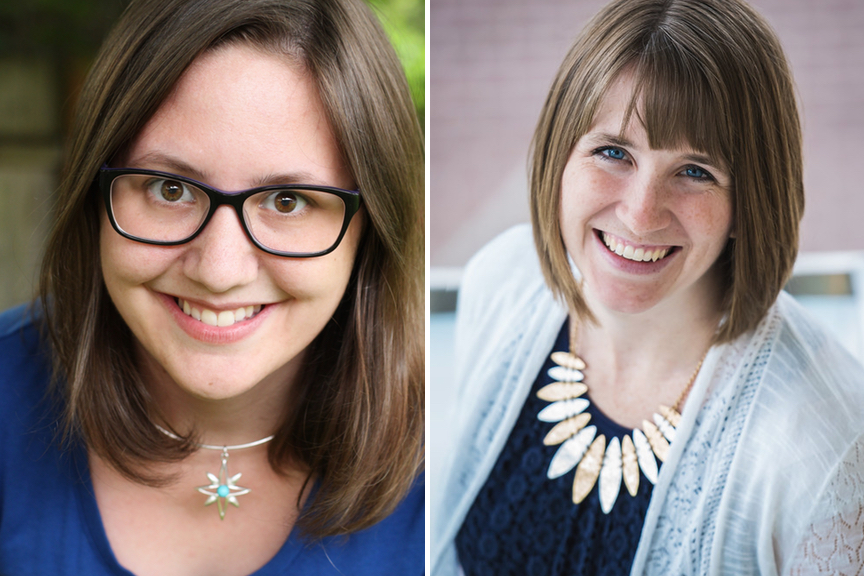
Cindy: I’ve always been a compulsive reader (when I was out of line as a kid I’d lose reading privileges for a day!), and that love of words and stories spilled over pretty early into a writing obsession. I’ve written five novels, the last of which got me my amazing agent! I’ve learned a lot along the way, including how to revise like a boss and how to keep trying even when success isn’t forthcoming—the part of the writing journey that’s tougher than anything else, at least for me.
I’m a Southern girl who now lives in Portland, OR, but who will always miss hot nights and fireflies and accents like warm honey. I usually get my word counts in during the evenings, after my irrepressible three-year-old is in bed. My writing interests tend to span the gamut, but in fiction my first love is YA or MG magical realism.

giphy

In addition to writing, some things I love are: super-dark chocolate, cooking, spending time outside, nearly every BBC period drama or mystery series I’ve ever seen, all things ocean- or beach-related, the South, hugs, herbal tea, and red toenail polish. I have secret, unattainable pipe dreams of subsistence farming, through-hiking the Appalachian trail (sidenote: if you don’t pronounce it app-a-LATCH-un, you’re doing it wrong), or living on a sailboat. I was diagnosed at six months old with the genetic disease cystic fibrosis, and would love to see a story that deals with chronic illness in a sensitive and realistic way!

Amanda: I’ve always loved to read…children’s books. They outnumber adult books in my house 3:1. And that is not just because I have kids (though they make a great excuse to feed my obsession.) I have not, however, always loved to write. Actually, for most of my life I would have told you that I hate writing, except for the occasional, angsty teen poetry. I never saw storytelling as my thing. But then everything changed in one night a little over four years ago when I couldn’t fall asleep and here we are! Because I never considered myself a writer, I’ve always approached it with the understanding that I’m not very good at it and have so much to learn and need lots of practice. This attitude has served me well.

I’m a Wyoming girl living in California. I homeschool my three kids using the Waldorf philosophy (and if you know anything about that, you realize that makes me a bit of a hippie). I teach educational enrichment classes, play the piano, garden year round, knit/crochet, and also have this not-so-secret dream of subsistence farming. What the heck, Cindy? Come live with me and let’s get this started! I may have promised my kids chickens when we buy our own house.

Things I geek out over: GoT, Battlestar Galactica, Unbreakable Kimmy Schmidt, Jane Austen, The Beatles, Disneyland, Yosemite, Yellowstone, physical chemistry.

The two of us met when we were both mentees last year, and after Pitch Wars ended we became CPs. We’ve since signed with the same agent in addition to being Pitch Wars co-mentors, so yeah, we’re basically bonded for life now.giphy (1)

Our favorite genres are MG contemporary, Magical Realism, and historical. Within those genres we are particularly looking for stories usually labeled, quiet, character driven, heartfelt, and literary. The comedic and quirky is not really in our wheelhouse. That’s not to say that we don’t want a book that has quirky or comedic elements (we love those!), but that shouldn’t feel like the main focus or strength of the story. We want FLORA AND ULYSSES, not DIARY OF A WIMPY KID. We are particularly looking for stories the revolve around big, hard, real-world problems. If somebody has ever said, “Wow, isn’t that a little heavy for MG?” We want it. If somebody has ever said, “This is really sad.” We want it. We want to feel something. We want to bawl our eyes out. We want to see beautiful, powerful prose (or poetry). We want books that exemplify the quote “When a subject is too hard for adults, I write it for children.” We want books that tackle tough subjects in a hopeful and life-affirming way. We want big philosophical ideas handled with the grace, wisdom and innocence of this age group.

giphy (2)

We’re accepting SFF as well, but tend to be pickier about those genres. We love books that use a fantasy framework to tackle big, real-life issues. We love books that draw on mythology in interesting and classic ways. We love books that use their fantastic settings uniquely, to draw back the curtain on things in our own world. We’re less likely, however, to be the right mentors for adventure fantasy—think CIRCUS MIRANDUS or WHERE THE MOUNTAIN MEETS THE MOON rather than FABLEHAVEN or PERCY JACKSON.

Other things we’d be excited to see:

::Diversity, especially of ability, neurology, class, and religion
::Characters influenced by faith but not in a faith-based story
::Homeschooling!
::Unique structures and formats
::Bittersweet endings
::Anything involving the ocean
::Strong, vibrant settings
::Science incorporated in a beautiful, meaningful way! (THE BRILLIANT FALL OF GIANNA Z. or THE THING ABOUT JELLYFISH.)

Our strengths (aka Why You Should Choose Us):
::Setting as character
::Beautiful prose (Cindy does a mean line edit)
::Emotional resonance (Amanda is really good at big picture threads)
::Imagery/symbolism
::Character arc
::Deep POV

Ever since Pitch Wars last year we’ve been CPing for each other, and had a front-row seat to see each other’s strong points! Here’s what we have to say about each other:Cindy: Amanda is terrific at honing in on which areas of a story’s plot could be made bigger, more vibrant, and carried through better—and she’s also a fantastic cheerleader and knows just how to make you feel great about your writing! (Plus, she’s a beautifully supportive and generous friend.)

Amanda: Cindy is my favorite person I got out of Pitch Wars. She is an excellent cheerleader. Craft wise, she helps me hone my words to be more poetic and has a good eye for what I think of as “micropacing.” Noticing those moments in your writing where you need to pause, slow down for a few sentences, and stretch out the moment.

Together, we think we are a great team help a manuscript on a big picture scale as well as sentence level to get the biggest emotional bang for your buck without becoming saccharine or sentimental.

If any of these could be a comp title…grabby hands!
Anything by Kate Dicamillo, Sharon Draper, Lynda Mulally Hunt, or Sharon Creech
THE THING ABOUT JELLYFISH
PAPER WISHES
A SNICKER OF MAGIC
COUNTING BY 7’S
LOVE, AUBREY
DEAR MR. HENSHAW
MISSING MAY
SARAH, PLAIN AND TALL
THE WAR THAT SAVED MY LIFE
WHERE THE MOUNTAIN MEETS THE MOON
HOUR OF THE BEES
GOSSAMER (Lois Lowry)

But most of all… we can’t wait to meet you!
giphy (3)

1.

2.

3.

4.

5.

6.

7.

8.

9.

10.

11.

12.

13.

14.

15.

16.

17.

18.

19.

20.

21.

22.

23.

24.

25.

26.

27.

28.

29.

30.

31.

32.

Powered by… Mister Linky’s Magical Widgets.

Gray Areas in Middle Grade


The wonderful thing about middle grade literature is that it’s really the beginning of opening up this idea of moral gray areas to children. It’s really the first time they get to experience that realization that good people can do bad things and bad people can do good things and maybe people are much more complex than the labels of ‘good’ or ‘bad.’

gray area

Before now they’ve had fairy tales and picture books. Beautiful literature, but most of the time the line between good and evil is very stark, very black and white. The witch is always bad, the princess always good. there is very little gray area.

So as middle grade authors, this is a very heavy responsibility. One we should take great pride and consideration in. Here are some things to consider when writing in the gray areas for middle grade.

  1. Middle Grade novels can live and die with the gatekeepers. Parents, teachers, librarians. For the most part, they are sensitive, understanding people. but they still are trying to protect their children from some of the harder realities of the world. So while your MG book can deal with really hard topics (there are MG books about abuse, drug use, racial divides, mental illness, lgbt issues, etc.) if you would ever describe your MG book as “gritty” it’s probably not going to fly.
  2. Fantasy and adventure books have a lot more leeway. The villains in these books don’t have to be quite so redeemed or shown to have a good side. The protagonists can do illegal and “terrible” things if the circumstances call for it and the cause is good and right. Think of Percy Jackson, they definitely killed some monsters, trespassed, stole stuff, etc. But even in MG fantasy/adventure, the death toll stays very limited, the MC hardly ever gets their hands dirty if another person dies. Think of the first few Harry Potter books. Nobody dies in the first year, a bunch of people are frozen and Harry kills a deadly basilisk and ghost Tom Riddle in the second. It takes until the fourth book to actually have a real person die. And its not at Harry’s hand. After that the body count starts going up, but books 5,6, and 7 while they are filed under MG, have a lot in common with YA, so I wouldn’t judge what’s okay in your MG book by the later Harry Potters, but the earlier ones.
  3. Doing illegal things is a lot tougher sell in contemporary. They have to be relatively minor things. Trespassing, spying, maybe getting the better of a police force that has wrongly put you under house arrest (Okay, okay, I read Gordan Korman a few months ago. Can you tell?) But generally, if people in your MG contemporary do really bad things, there has to be an understanding that, somehow, there will be consequences for their actions. Often the protagonist will still get in trouble, even just a little bit, for doing something wrong even if their intentions were good. The thing is, the children reading these books are still just barely out of fairytales with black and white, good and evil. So while characters can exist in this morally gray area in MG contemp, I think there’s still this definite expectation that there will still be consequences. Maybe the antagonist won’t have as big of consequences as we feel someone deserves, but something. Or, if not consequences, then a moment of reconciliation or redemption, where we come to understand that the antagonist has a good reason for acting how they do or they do something to right their past wrongs.
  4. Especially in contemporary, there really shouldn’t be “bad guys.” You can have an antagonist (you NEED an antagonist) but they should be someone that your reader can understand or pity in some way. they can not be ALL bad. They can not be TRULY EVIL. They must have a good side. They must have good reasons or motivations. Or at least understandable ones.
  5. The most important thing for morally gray areas in MG is that good always wins. Even if the ending is not the happy one everyone hoped for, there is still hope. Life is expected to get better, or at least, the MC will be able to weather the storm and be okay. I think this is the kicker above all else. You can get away with a lot in your MG story if you end on hope. If good wins. And in MG, good always wins. Always. Remember, we’re not that far away from fairy tales. We are exploring moral gray areas, but we still want to present a good world to our readers. A world where kindness exists and hope always lingers.

We have a wonderful responsibility writing for this age group. Let’s not do it lightly. Let’s not write fluff. Let us write complex, morally gray, hopeful and beautiful stories. 🙂

Write What You Love to Read!

A couple years ago, I decided to apply for a freelance writing gig. Part of the process asked me several questions about my favorite books now, my favorite books when I was a kid, and what genre I write. As I filled in my answers, I noticed something strange. Back then, I was still writing contemporary fantasy, fairytale retellings, stories with paranormal elements. But the majority of my favorite books were bittersweet, heartfelt contemporaries, with WALK TWO MOONS taking the cake.

giphy (1)

It made me pause. What would the people reading this application think about that?

About six months later, I whined in a group on facebook about how I love really flowing, beautiful, lyrical writing. But how I just CAN’T write like that. I write short, and to the point, and sarcastic. A discussion ensued with several people saying there were all sorts of styles of writing, which is true. But my heart still longed to write like Kate DiCamillo and Sharon Creech.

Then I wrote my next book. And the first draft was a very short, choppy, semi-sarcastic book with paranormal elements. I didn’t like the voice. It was almost nonexistent. So I rewrote it….in a lovely, lyrical voice.

And I realized something. All this time, I didn’t think I could write like that. But I could! I just had to stop telling myself I couldn’t and actually give it a try. And guess what? All that reading of those books I love helped me write the way I loved.

Then Pitch Wars happened, and you probably know the story from here. But my mentor suggested I consider removing the paranormal elements from my story and taking it straight contemporary. I balked. I CAN’T write contemporary. I can’t make a story interesting and exciting without magic.

Wrong again. I can. And the truth is, I’m pretty dang good at it.

I don’t consider the years I spent writing sarcastic fairytale retellings as a waste. Not at all. I learned a ton. But if I could go back and tell myself something, it would be this.

Don’t be afraid. Those kind of books you love? You can write them. You’re good enough. The inspiration will flow. Stop holding yourself back.

And so now I’m telling you.

You’re good enough. You’re smart enough. And gosh darnit, people like you!

Go out there and write what you love to read.

29 Writing Tips For My Birthday!

Today I turned 29. No really. I really am 29 today. Next year I will be 30, which is kind of crazy. That was always the line into being “old.” Now…not so much. 🙂  So, because writing changed my life, this year I’m blogging 29 writing tips! Enjoy!Birthday-Cake-clip-art-289x300

  1. Make a writing schedule and follow it 90% of the time. It doesn’t matter what that schedule is, just keep it as much as possible. But also give yourself a day off occasionally.
  2. Don’t be afraid to be honest about your publishing dreams. You’ll find people are much more supportive than you thought.
  3. Don’t make this publishing journey without a writing community. Whether it’s online or in-person. A few CP’s or a twitter group. Make connections to share in the ups and downs.
  4. Write that thing that scares you a little bit. You should always be stretching yourself.
  5. Writing isn’t always fun. It’s hard work. Write anyway.
  6. Write something that will change your life.
  7. You’re a better writer when you get out and live life.
  8. Read, read, read.
  9. There will be lots of nights where you will sit down at the computer and not know what to write. Write through that feeling. Throw in something crazy or just write the next thing even if you know it’s boring. But keep writing. You’ll find your way to where you’re supposed to go.
  10. Embrace the fact that your first draft will suck.
  11. Stop viewing agents as gatekeepers intent on crushing dreams. They want to love your book.
  12. Stop viewing agents as your superiors or heroes. Yes they are important. But when you finally land one, it’s important to remember that they are your partners and you both have a right to proper, professional communication in that working relationship.
  13. I promise you, no matter how you feel right now, this is not your last chance, last book, last idea. A nurtured creative well never runs dry for too long.
  14. Self care is vital to creativity.
  15. There is no such thing as a small revision. If it feels small, it probably isn’t getting to the root of the problem.
  16. Don’t be afraid to rip your story apart in revisions. It WILL be better in the end.
  17. Rewriting is an awesome, awesome tool. Use it.
  18. Improving as a writer requires feedback. Get it. And don’t toss it aside lightly.
  19. Find the heart of your story and stick to it. Everything else in your book is negotiable. The heart is not.
  20. You’ll never feel like your book is perfect and it never will be. But there will still come a time when you need to send it into the world and let go. Do it so you can move on.
  21. Your next book will be better. Write it.
  22. I don’t think writing ever gets easier no matter where you are on the journey. There are always new challenges. And in  the end, even your bestselling authors have to struggle through a crappy first draft, have to incorporate feedback that hurts to hear at first.
  23. Be an amazing critique partner. This is the only way to HAVE an amazing critique partner. You can not survive long without one.
  24. Less is more is almost always true. Stop hitting your reader over the head.
  25. Show, don’t tell. Show, don’t tell. Show, don’t tell. Really, truly understanding this rule in all it’s forms (and when to break it) is the key to great writing.
  26. Go to conferences. Read craft books. Ask questions.
  27. Celebrate everything. You are doing something most people only dream about doing!
  28. Be kind. Be positive. Be honest. The publishing world is small.
  29. Don’t write at arms length. Get as close to the pain and joy and longing as possible. Feel it. Then make your reader feel it.

Wishing you Love and Blessings and Contracts in the coming year!

Ways to Improve Your Writing Without Actually…Writing

So, obviously the only way to become a better writer is to write. Regularly. But some days writing just doesn’t happen, for one reason or another. Maybe you are on vacation, or feeling really sick, or just feeling burnt out.

Stop feeling guilty or like you will lose ground. While this shouldn’t be a regular occurrence, it happens. Give yourself some grace. And then remember that there are other things you can do that aren’t actually putting a pen to paper that will still have a positive affect on your writing. So, in no particular order. Here we go.

Do some beta reading or critiquing. Sometimes, I think this works even better than writing to make you a better writer.

Read a book and pay attention to what makes it good or bad. Analyze the plot structure, the voice, the characters.

giphy (1)

Make a pinterest board with images to use for your book. Photos of your setting and people who look similar to your characters will help you make the details more vivid.

Read a book on craft.

Do some research for your book. Every book needs at least a little research.giphy (3)

People watch and write down little details about a person that bring them to life.giphy

Sit and listen to conversations in a crowded area to get a feel for how people talk and interact with each other.

Do something creative other than writing. Knit, garden, paint, dance. Whatever it is. It will fill that creative well that you need to draw from when you write.

Do some positive reinforcement for yourself. I know people who have taken headshots for their future announcement, written “I am pleased to announce blah blah blah” on a sticky note and put it on their computer, even bought the dress they will wear to their future book signing. When I was querying, I drafted my nudge email before I had an offer to nudge with. Do something to really visualize your future success and bring on the positive vibes.

Talk with someone about a book!

Go analyze some other kind of art and figure out why it speaks to you. Brainstorm how you can bring that into your writing.

giphy (2)

Go spend some time asking and answering questions on the SCBWI blueboards.

Go through PM and MSWL and make a list of agents to query.


I’m sure there are more. What about you? When you can’t write, what kinds of things do you do to make up for it?

Write Something That Will Change Your Life

I’ve been reading John Truby’s ANATOMY OF STORY. And let me tell you, that thing is stuffed full of so much good stuff for writing. Many things I was already subconsciously doing, but after reading about half the book now and keeping his “steps” in mind as I’ve gone into my new WIP, it’s really allowed me to address certain problems right up front.

I think one of the most important things he’s said, though, is near the beginning of the book. He gives a two step approach to developing a premise and the first step is this.

WRITE SOMETHING THAT MAY CHANGE YOUR LIFE

Truby goes on to say, “This is a very high standard, but it may be the most valuable piece of advice you’ll ever get as a writer. I’ve never seen a writer go wrong following it. Why? Because if a story is that important to you, it may be that important to a lot of people in the audience. And when you’re done writing the story, no matter what else happens, you’ve changed your life.”

Gosh, I love that! Mostly because it took me over three years of writing before I came to that conclusion myself, and then to read it in a craft book was a nice piece of validation. But I think he is absolutely right. You are going to spend at least a few months, a year if you’re like me, working on this story. And guess what? It might not go anywhere. It might stay stuck on your computer forever. But if you write something that changes you, changes the way you look at the world, changes your life, then it’s all worth it.

I don’t like to look on any of my writing time as a waste, even when it didn’t produce top-quality material, because it all taught me something. But I spend two years on a contemporary fantasy manuscript when I first began writing. And to this day, I can tell you the plot and all about the characters. But I still can’t truly tell  you what I was trying to SAY with it.

Because in the end, the best books, the ones you reread and carry around in your heart with you always have something TO SAY. Not in a preachy manner, and not as a lesson. But they speak to us because there is a message behind them. An idea the author wanted to explore. A dichotomy.

What you have to say won’t always be the same kind of thing. I’ve written two books and am currently drafting a third, since I figured out this life changing aspect of writing. And each of those books has a very different thing I was trying to say or explore in the story.

Book #1 – The give and take of love, friendship, and forgiveness is a kind of magic. A bit of grace without real explanation.

Book #2 – It is possible to be two seemingly opposite things at once. Living and dying, faithful and doubting, scared and brave.

Book #3 – Creating a community by attending to each other’s needs.

Now just so you know, books 1 and 2 are contemporary and number 3 is a light fantasy. Your genre doesn’t make a difference here. The highest fantasy can still explore themes important to a contemporary audience. Indeed, if you want your story to have staying power, it must resonate to people in the “real world.”

Now, writing something that will change your life takes practice, I think. I never discovered what I wanted to say with my very first book. It took three rewrites to figure it out with my second book. It took halfway through the first draft of my third book to fully realize it, and then finally, with this fourth book, I knew what it was before I started. And guess what? It has taken so much pressure off of writing this story. Because I know that everything has to eventually serve this greater purpose of showing the creation of community.

The thing was, I always thought I had a premise before. A premise to me was just a good, hopefully unique idea.

I want to write a fairytale retelling from the male POV! Boom. I started writing.

I want to write a book about grandma guardian angels. Boom. I started writing.

I want to write a book about a girl who might have a cancer gene. I waited. She has two possible futures. I should find a way to show that. Okay, then I started writing.

Finally, I waited and waited, and let my idea develop for a bit before writing. I should note this was because I had to finish another book first, not because I was actually growing wiser as a storyteller. 😉

I want to write a book about a fallen star full of wishes. Wait. Wait. But how do I make that important? What is important about wishes. Wait. Wait. If wishes just came true, we wouldn’t need to help each other, would we? Wait. Wait. If we weren’t helping each other, we’d live in isolation. Wait. Wait. And then I had a thought. This is about a neighborhood coming together. Building community is something I think about and talk about a lot. And so it was very natural for this idea to come to me. Because I’m already passionate about it. And because I’m passionate about what I’m trying TO SAY, writing this book doesn’t feel quite as hard, and it already has layers right from the beginning.

But I had to let it simmer and steep for a while. I had to ponder on it and also reach inside myself and ask, What is important to me?

Truby has two different exercises in his book to help you dig out of yourself what is important to you. What sort of ideas will change your life and be worth your time. I won’t give you those, I think you should buy the book.

But even if you don’t, I can’t recommend enough, waiting to write your story until you’ve gone beyond a premise that’s just “cool” and actually explored the question, What do I want to say?

For Love of Contemporary

When I was growing up, my favorite book was WALK TWO MOONS by Sharon Creech. I can tell, by my memories of the book, that I didn’t truly understand all the intricacies of the story at the tender age of nine. And yet, something about it touched me so deeply and profoundly that I have always listed it in my top five favorite books.

There’s something special about Middle Grade literature, and even more so contemporary Middle Grade. There is this huge, enormous potential for empathy of characters in all sorts of situations, and yet, still an understanding, really, a necessity, for good to still win out in some way. Perhaps not a perfectly happy ending, but a hopeful one that leaves the reader with a greater understanding of the world around them as well as a greater ability to see the light and the good and the beautiful.

Harry Potter is wonderful. And I adored ELLA ENCHANTED. Every kid dreams of magic and flying and monsters, and all those fun things are part of Middle Grade lit too. And I have to hand it to the people who write fantasy, it’s not easy. World Building is hard. You people have amazing imaginations.

But I wanted to take a minute here to thank those authors who have made me pause at the beauty of the contemporary. The normal. The every day exquisiteness of the people and moments around us. The drama of those small, quiet choices that make all the difference.

Those moments may not come with explosions or magic words or portals to another world. But these moments are powerful. That decision to put down the bottle comes with it’s own war zone. The moment a new friendship is realized and opens up a whole new way of looking at the world. The right words spoken to a broken heart, can be more powerful than any spell.

These authors I love and respect take the turning point moments of our lives, letting go of what is no longer yours, jumping into the unknown, pouring your whole heart into something only to see it fail,and they turn them into works of art.

They fill the world with hope. Hope sprinkled into the little moments. The normal. The every day.

I’ve never lost a loved one to Avada Kedavra, but I’ve had my very last interaction with my best friend be negative, before she died. I’ll never be in a final battle between good and evil, but I can choose kind. I’ll never go on a journey to rescue treasure from dragons, but I’ve learned how to walk two moons in somebody else’s moccasins. And so, to all you writers of contemporary Middle Grade. Thank you. Thank you for instilling reverence, awe, joy, and most of all, hope, in your readers, by tucking all of that and more into everyday moments, and creating empathy, compassion and understanding.

You are my heroes, and I want to be you when I grow up.

Writing Merit Badges

I’ve been trying to focus on celebrating this journey every step of the way. It’s easy to get so caught up on the BIG goals that we forget to notice the small victories and progress we’re making.

So in that honor, I present you with WRITING MERIT BADGES. You’ll notice, these merit badges do not include the normal milestones we all think of. (Write a book, find an agent, get a book deal, move to Bahamas.) But it has some other milestones you’ve either already hit or probably will hit and weren’t even thinking about.

Category 1 – DRAFTING

THE SHOWER RUN – This merit badge is awarded when you have an idea so good and so profound that you have to rush out of the shower, dripping wet, to write it down. **This badge can also be awarded during the revisions stage**

THE ROLLERCOASTER – When you go from thinking this is the best book you’ve ever written to considering trashing the whole manuscript and then back up to thinking you’re a creative genius. **Must complete cycle within a period of 24 hours.**

THE NOTES INSTEAD OF PROSE- When you can’t think of a certain detail or comment for a character to say so you leave yourself a note instead. i.e. “[Insert something sarcastic about wombats here.]”


Category 2 – REVISING

THE CRYBABY – When you get back feedback that makes you cry (good or bad.)

THE REWRITE – When you realize your manuscript needs more than a revision. It needs an entire rewrite. And you actually do it.

THE “MY SUBCONSCIOUS IS A CREATIVE FREAKING GENIUS” – When you realize that a detail you only threw in haphazardly, for no particular reason at all, in the first draft, is the key to a major plot problem, or symbolic of something, or otherwise deepens your story in a way you didn’t originally intend.


Category 3 – RELATIONSHIPS

THE FRIENDSHIP BADGE – When you call your critique partner “my friend” and realize that’s what they’ve actually become.

THE BETTER THAN “IRL” FRIENDS – When something non-writing happens to you and you decide to talk about it with your writing friends before your “real life” friends.

THE MEETUP – When you make plans and meet up with your writing friend in real life.


Category 4 – QUERYING

THE DEAR AUTHOR REJECTION – Self explanatory

THE R&R – Self explanatory

THE REJECTION OBVIOUSLY MEANT FOR SOMEONE ELSE – When you get a rejection that mentions something not in your book, or is even addressed to a different person.

THE MULTI-REJECT – When the agent or editor hates your stuff so much, they feel the need to reject it twice.


Category 5 – SUBMISSION

THE EMAIL WITHDRAWAL – This badge is awarded the day you stop refreshing your email more than twice a day.

THE CLOSE BUT NO CIGAR – When an editor tells you they went back and forth on it but ultimately decided no.

THE FAILED ACQUISITIONS – When you make it all the way to acquisitions but fall short of that book deal.

THE EXTREME SELF CONTROL – When you suppress the urge to email/call your agent and beg them to put you out of your misery

THE SHELVED MANUSCRIPT – Self Explanatory


Category 6 –SUCCESS

THE ACKNOWLEDGEMENT – When your name appears in someone else’s acknowledgements.

THE SUCCESS BY ASSOCIATION – When your CP has a book come out and you get recommend it to everybody you know.

THE COMP TITLE – When your book is used as a comp title.

THE CLIENT INTERVIEW – When your agent is bringing on a new client and they send them to you to answer questions about your agent


Category 7 – MISCELLANEOUS

THE QUITTING BADGE – When you decide you’re done with writing once and for all and quit. **This badge can only be awarded after you come to your senses and return to writing.**

THE ADMISSION – When you finally describe yourself as “a writer” to someone else without embarrassment.

THE AWE AND WONDER – When you look at your life and wonder how much more boring it would be without writing and feel that immense sense of gratitude and awe that you actually are doing this!

COLLECT THEM ALL! WE’RE ALWAYS EXPANDING! WHICH BADGES WOULD YOU ADD?


Changing How You Tell Your Own Story

Yesterday I typed “The End” on my third novel. I’ve been writing for nearly four years now and there’s still a thrill in finishing that first draft. But there’s also another feeling, a wonder and amazement. I can’t believe I’m actually doing this. I can’t believe I’m still on this journey.

And since tone is hard to get across sometimes, those sentences are uttered in a good and happy way.

Writers, this is an amazing journey we are on. How many people think about or talk about writing a book? How many people actually sit down and do it. Slave over it? Get their heart ripped out of their chest over and over again? Put themselves out in that arena and get knocked down? And then…sit down and WRITE. THE. NEXT. BOOK.

But look at that last paragraph. Nobody in their right mind with any experience would actually believe that this writing and publishing gig is easy. It’s heartstoppingly hard. First you deal with crippling doubt through the entire process, followed by the fact that rejections outnumber acceptances at least 8-1. Combined with all the waiting and hopes that get crushed time and time again, occasionally mixed in with a healthy dose of envy of those who seem to get to that next step on the journey faster or easier than you.

It’s easy to spend this writing journey wondering Why not me? When is it my turn? What is wrong with my writing? And having those thoughts spiral into…It’s never going to happen for me. I’m a terrible writer. I should just quit. Nobody cares.

So what can stop us from going into that spiral? Let’s face it, we’ll all face rejection, doubt, starting over, and the green monster.

The answer should be a simple one for us. You have to change the way you tell your story.

I try to look at this whole publishing journey as one amazing adventure. This isn’t just a fun hobby, this is far more intense. This is a long term career we are trying to pursue here. We are becoming intimate with an art form. We are pouring our heart into something. We are learning the inner workings of what it actually takes to get a book on the shelf. How many people actually know how that works? How many people experience that? We are living life in this beautiful, vulnerable, and thrilling state. With big dreams and big goals and big, open hearts.

And it’s a big goal. It’s a long term adventure. And you have to look at it that way to get through the hard days.

On those days when you get seven rejections in one day, you have to be able to take the long view and say, “This will make a great story one day when I do a school visit.”

When your dream agent rejects your full even though they loved it but just didn’t think they could sell it, you have to tell yourself, “This will make the tale of how I get my agent even more satisfying.”

When you have to shelve another book and start over, you have to change your thoughts from “this is hopeless” to “This will be an amusing footnote in my life story.”

And with every roadblock, every rejection, every struggle to reach the next milestone, you have to change from saying “I’ll never get there” to “This is not the end of the story.”

Every hard, terrible, anxiety filled day of your writing journey is just there to make the ending that much sweeter. Whether that ending is the fulfillment of all your dreams, or just the sweet satisfaction of making art that changes only you and realizing that’s enough, you are the one who tells that story. So change it from a short term melodrama, to a long-term adventure. Savor the ups AND the downs, that’s what makes it exciting. That’s what causes that thrill every time a possibility presents itself.

Embrace it.

Tell your story the way it should be told and change the way you look at it.